
Zhao Jin in the China-Myanmar-America Triangle
Ye Yint Nge — October 25, 2026
Bullet Hla Swe's video demand (with English captions)
The split is the news
In two days, a Facebook spat became a public rift. The Union Solidarity and Development Party (USDP) camp has publicly demanded that the Chinese government take action against a Chinese interpreter. That is not normal. Until now, this camp rarely confronted China in public. That is why this is a big event — bigger than a Facebook argument. On analysis, this is a split between China and the military bloc (the military-council camp).
What happened in two days
On October 24, 2026, Eleven Media Group published an opinion piece by San Moe Tun titled "To the China lobbyist Daw Saw Kyi... please stay far away from Myanmar." According to Eleven, Zhao Jin had called Eleven's article on China-Myanmar friendship a new wave of "green anti-China hatred." Eleven denies that — it says its article contained no hate content, and it challenged Zhao Jin to point to a passage that does.
The next day, October 25, USDP Central Executive Committee member U Hla Swe — known as Bullet Hla Swe — demanded in a video that the Chinese government act against Zhao Jin for criticizing USDP and Tatmadaw supporters. Reports say the trigger was Zhao Jin questioning criticism of Chinese Special Envoy Deng Xijun's "high-level self-administration" proposal.
Zhao Jin replied on her Facebook page: "Everyone, take care of your health. Eat well. Only by eating well can you stay healthy. Eating too much hot air harms your health." A sarcastic retort — too much empty talk is bad for you.
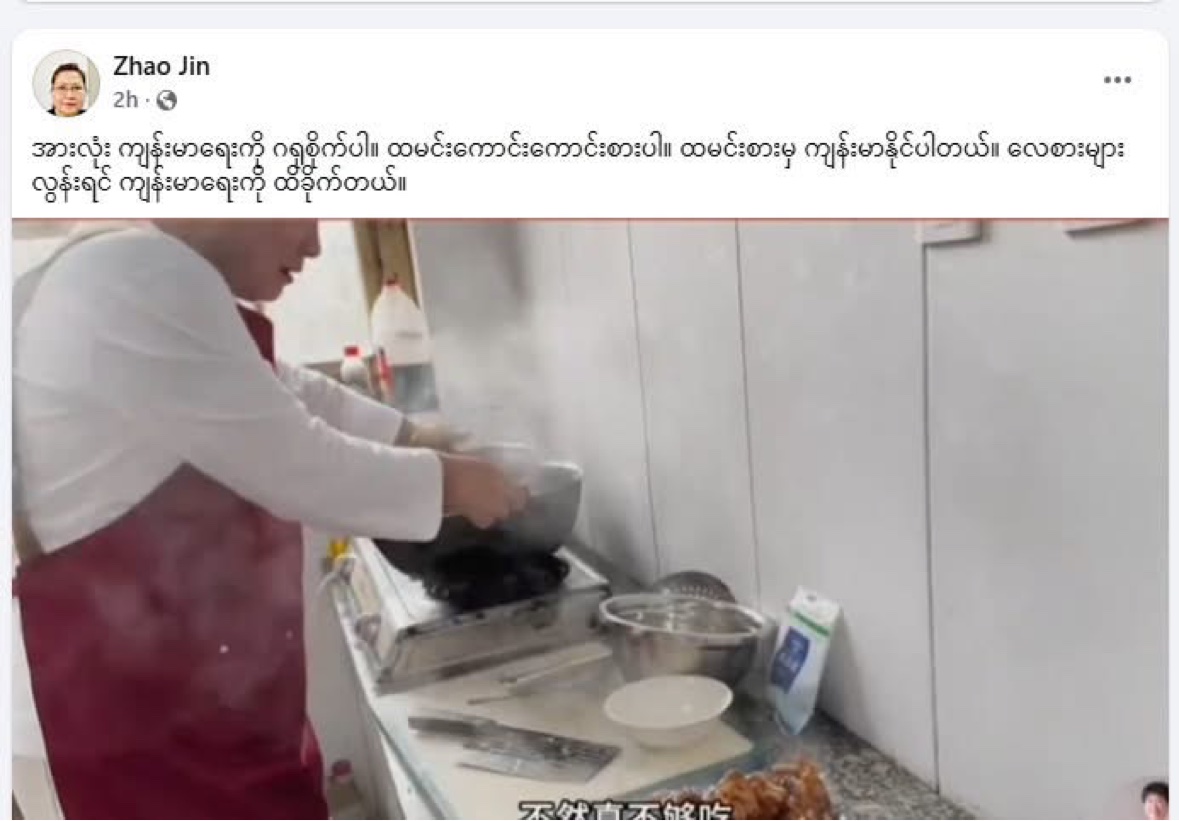
Zhao Jin's Facebook reply — "Eating too much hot air harms your health"
The word at the center of it all is a new one. "Sain-pain" (green faction) is a term that appeared in Myanmar politics in 2025–2026, originating from Zhao Jin's social media usage. Her line: "Before, the reds were more numerous; now the greens are more numerous." "Ni-pain" (red faction) refers to NLD and democracy supporters; "sain-pain" refers to USDP supporters. Per one explainer, "ni-pain" is slang for a blind NLD/democracy-side supporter — "ni" from the NLD's red, "pain" from "tone-a-pain" (dull, unthinking). The USDP side takes it as an insult. Revolution supporters, meanwhile, use it as memes.
Who is Zhao Jin?
According to the Eleven article, Zhao Jin was born in 1973 in Baoshan, Yunnan. She graduated from Beijing Foreign Studies University (BFSU) in 1997, taught in the university's Myanmar department, wrote research, and worked temporarily in the Chinese embassy's economic section. Her Facebook page describes her as "Daw Saw Kyi, China, Beijing, BFSU, Beijing Foreign Studies University," a digital creator with around 17,000 followers.
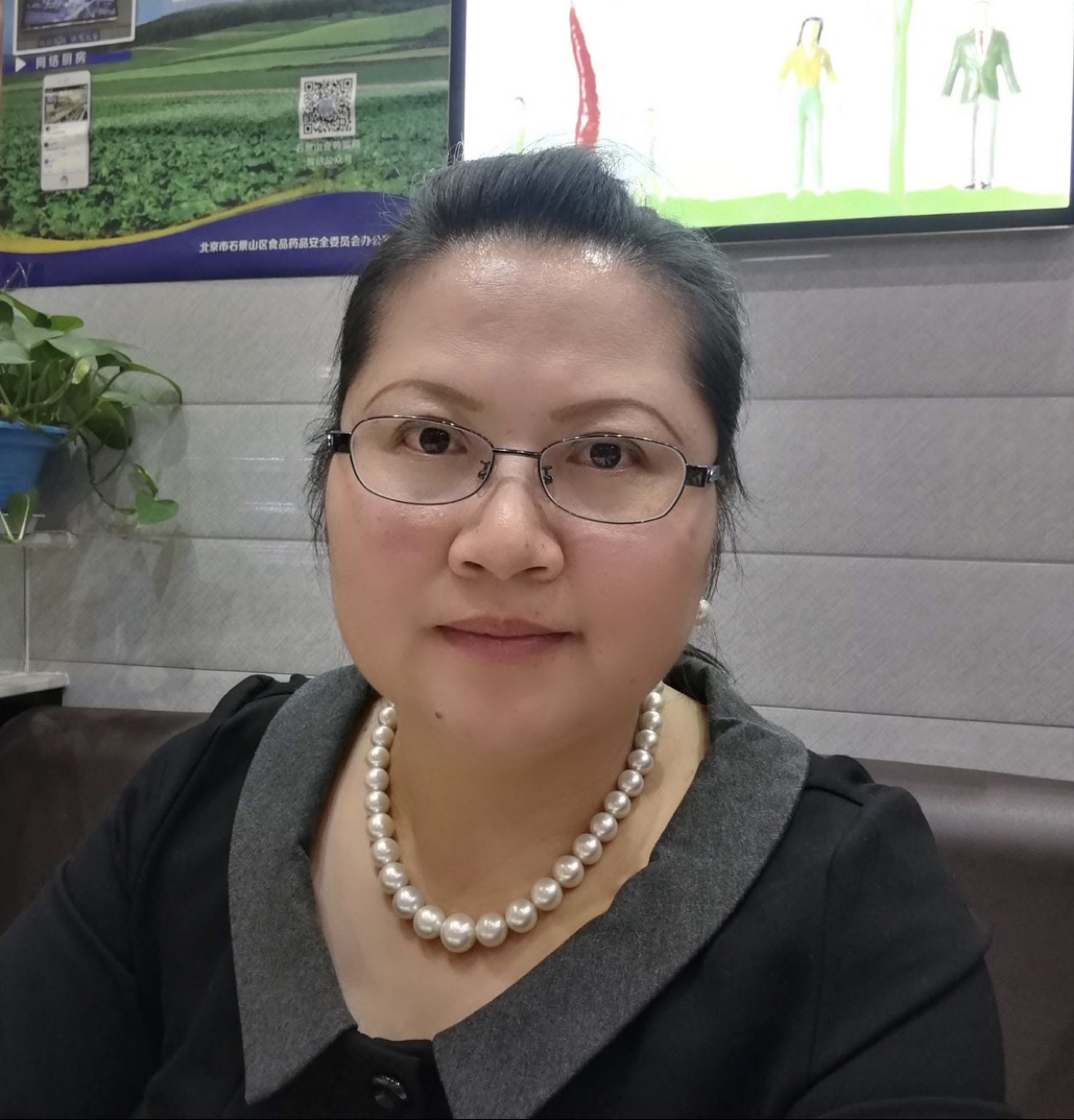
Daw Saw Kyi (Zhao Jin) — Facebook profile photo
On the Myanmar side she is known for more: she has worked as an interpreter on Min Aung Hlaing's study trips, including China trips. A photo of her standing close to Min Aung Hlaing at an exhibition-style event is circulating online. The photo alone does not prove the interpreter claim, but it shows proximity and access.
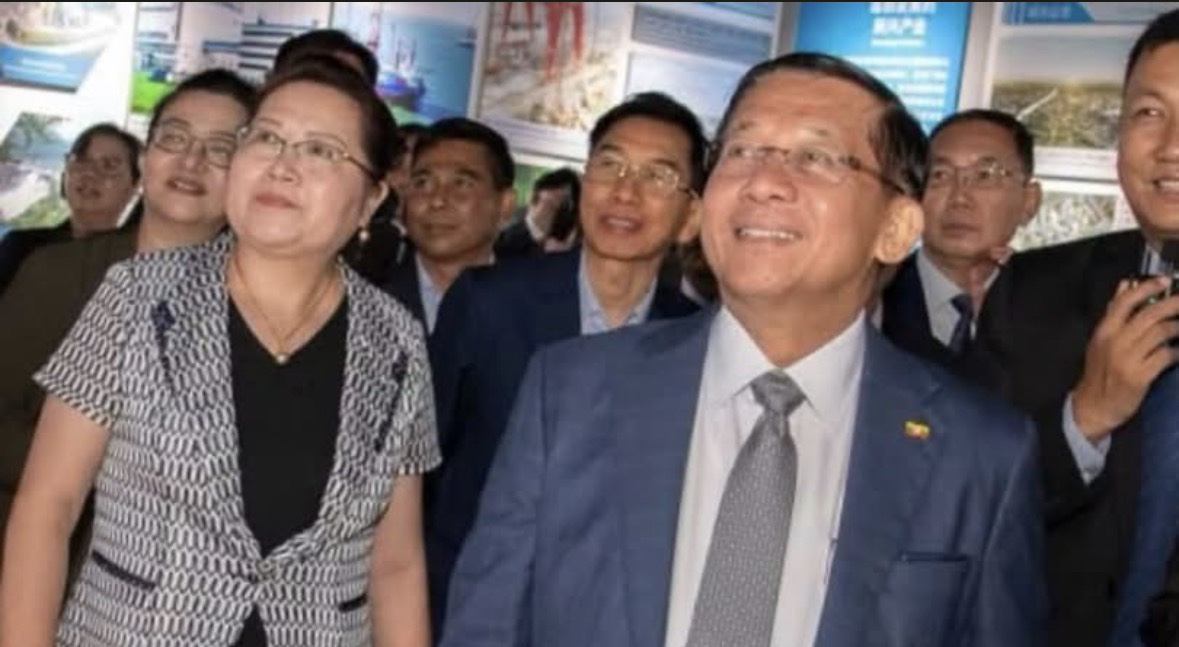
Daw Saw Kyi seen near Min Aung Hlaing at an exhibition
Eleven's view is that Zhao Jin is a lobbyist for China living in Myanmar. Those are Eleven's allegations.
How deep is the rift — the Kokang poster
One poster shows how big this is. It is a USDP Kokang Self-Administered Zone committee election poster — seven candidates, Chinese-dominant text, Union Election Commission logo. Its slogan: "Kokang development: let Kokang's tomorrow be better."

USDP Kokang Self-Administered Zone election poster — seven candidates, Chinese-dominant text
The party that campaigns in Chinese in Kokang is now publicly confronting China. That contradiction is the heart of this story. A party campaigning in Chinese while reporting a China lobbyist to the Chinese government — that is what makes this bigger than a Facebook spat.
The triangle behind it
America — On September 15–16, 2026, US envoy Michael Vance met Min Aung Hlaing in Naypyidaw, followed by a second round in Tokyo. Those meetings produced the Castillo release and scam-center action. No rare-earth deal has emerged.
China — After the US meeting, Min Aung Hlaing visited China. Border trade then reopened in reports: of 19 border gates, only 6 reopened, with restrictions.
Northern Shan — In Myanmar National Democratic Alliance Army (MNDAA) areas, Chinese script, language and yuan are in use. On October 23, 2026, the Shan State Joint Action Committee (SSJAC) issued a statement strongly objecting: MNDAA imposing an unfamiliar language as the official language, forcibly changing traditional land systems, and forcibly renaming towns and villages — for example, the historic Shan saopha town of Hsenwi renamed "Mubang" in Chinese. Under the 2008 Constitution, Hsenwi is a Lashio District township, not part of the Kokang Self-Administered Zone.
My view
On the surface this looks like a fight between two people. In reality it is a picture of the whole system.
First — Min Aung Hlaing is not switching sides; he is hedging. He meets America, visits China, talks to Russia. He leans fully on no one. Hedging is his survival method.
Second — China's Dual Engagement Policy is real. China deals with the military council and with ethnic armed organizations alike. The fact that around 91% of China-border trade passes through EAO-held areas proves it. Blaming one alleged lobbyist will not fix the problem.
Third — behind Zhao Jin stands the Chinese government. A BFSU teacher, a former temporary staffer in the Chinese embassy's economic section, Min Aung Hlaing's interpreter on China trips: taken together, her words are not a lone voice but part of Beijing's pressure on the military camp. The timing reinforces the reading — right after the US meeting, Min Aung Hlaing's China trip, and the border reopening. So this affair is a message from China to the military bloc, answered publicly by the military bloc through Bullet Hla Swe — a split that has only now come out into the open.
Fourth — the online fight buries the real questions: how far has the Hsenwi–Mubang renaming gone, and what does China's "high-level self-administration" proposal actually mean? Those questions remain unanswered.
Finally — the most important point: do not hate an ethnicity. Myanmar people do not hate Chinese people, and China is not a country to fight. What deserves opposition are the lobbyists who belittle Myanmar people, the policies that harm sovereignty, and the systems that seize land. In Eleven's closing words: it is not Chinese people who should stay far away from Myanmar — it is the lobbyists who belittle Myanmar.
An analogy for readers: in US politics, MAGA is ni-pain — the same blind loyalism.
What to watch
- 1. Does Beijing respond at all to Bullet Hla Swe's demand?
- 2. Does Zhao Jin's Facebook account stay up, and does she keep posting?
- 3. Do more border gates open, and does fighting resume in northern Shan?
- 4. What does MNDAA say about the SSJAC statement and the Hsenwi–Mubang renaming?
We will keep watching these points and report again when something new emerges.
Sources
- Eleven Media Group opinion piece (San Moe Tun, October 24, 2026): https://news-eleven.com/article/316326
- Bullet Hla Swe's demand and Zhao Jin's reply (October 25, 2026)
- USDP Kokang Self-Administered Zone election poster
Note — The allegations in this article are attributed to the parties concerned, and points needing independent confirmation are presented as claims.
မှတ်ချက်များ
Post a Comment